


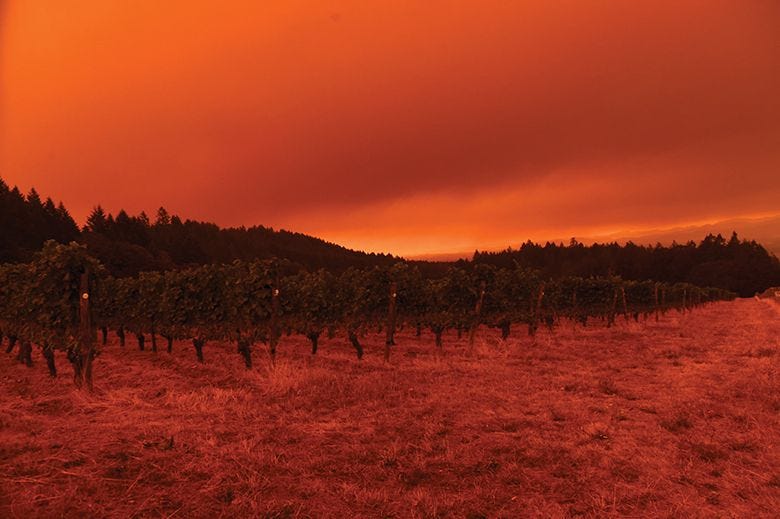
Last week, spurred by the dirge of fires that swept the nation (and globe), I talked about all things wine and fire-related. So if you missed last week’s newsletter, I highly recommend you start there. Today we’re picking up today exactly where we left off. READ PART ONE HERE.
We talked about what smoke taint actually is, how it affects a grape, and why the question of how badly grapes are affected is so hard to answer. Because essentially, it depends—on many, many factors: the proximity and freshness of the smoke, how long it hangs around, what the wind is doing, what exactly is burning, and a laundry list of other factors.
The analysis of why is all well and good. But if you are a winemaker and the smoke has arrived, you don’t have the luxury of asking why. You just need to answer: now what?
So today, that’s what we are going to look at. To pick or not to pick, to vinify or not to vinify, and if so, how. These are the questions.
Can’t you just test the grapes?
This was one of the biggest questions in 2020. Surely there must be a lab somewhere where one could take a cluster of Pinot Noir, run some tests, and get an answer: These grapes are screwed. Leave them on the vine. Or: There’s smoke taint in the skins, but you can make wine around them. Or, in a perfect world: No smoke taint. Proceed as normal.
But it turns out that testing is not nearly that simple.
Technically, yes, you can test for smoke exposure. Labs can look for specific chemical markers associated with smoke exposure (volatile phenols like guaiacol and cresols, as well as the glycosides those compounds form after the grapes bind them to sugars). And as wildfires become increasingly prevalent in major wine regions, the research is getting increasingly more useful.
But remember what we talked about last week: a grape can look perfectly healthy and even taste relatively normal while some of those smoke compounds are essentially hiding inside of it. And while increasingly sophisticated tests can detect those compounds, translating those numbers into exactly what the finished wine will taste like is another question entirely.
So yes, a lab can tell you that smoke exposure occurred and help assess how serious that exposure might be, but producing a straightforward binary answer about whether the finished wine will taste smoky is much more difficult.
And then there’s the problem that when smoke hits a region, everyone needs those tests at exactly the same time.
In 2020, wineries all over Oregon and California were suddenly and simultaneously sending fruit to the same handful of labs, resulting in massive backlogs at the exact moment when nobody had time to wait. The grapes were continuing to ripen, harvest crews were already hired, labor was being spent, farmers were wondering whether their grape contracts were going to be honored, and winemakers had very little information with which to make an incredibly expensive decision.
So it’s not surprising that winemakers across Oregon arrived at very different answers.
So which road do you take?
Well, one option is to screw your courage to the sticking post and make red wine.
This is more or less the path John Paul Cameron chose at Cameron Winery, although it doesn’t do him justice to say he just crossed his fingers and hoped for the best. He used his decades of skill as a seasoned winemaker to evaluate the conditions and adapt his winemaking accordingly.
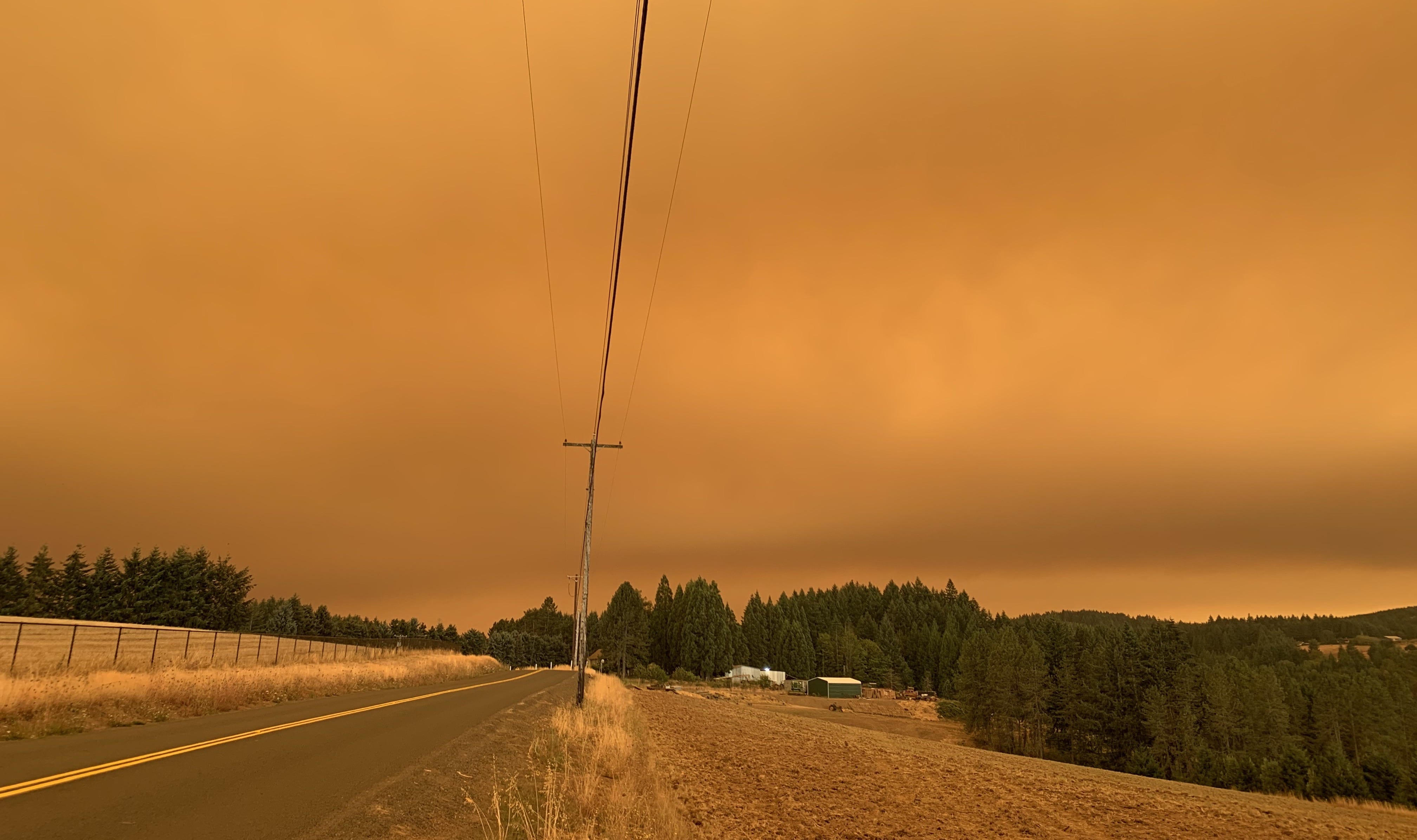
After the smoke finally cleared in 2020, John Paul waited to pick until two significant rainstorms had moved through. The rain washed the visible soot and ash from the fruit—which does not mean it washed away the smoke compounds the grape had already absorbed—but at least it gave them clean fruit to work with.
Then he adapted the way they handled it. Instead of aggressively crushing the Pinot and extracting everything possible from the skins, he treated the fruit extra gently, trying to keep the berries coming out of the destemmer mostly intact and thus limiting the amount of smoke-affected material being extracted into the wine.
John Paul wrote later in his harvest report that fermentations smelled remarkably normal. Which sounds reassuring until you, gentle reader, know what you now know: some of those compounds don’t announce themselves immediately.
But ultimately, John Paul’s gamble paid off. He credits his vineyard’s relative distance from the most intense fires, the cleansing rain and, as he put it, the “luck of the gods” with their delicious final product. Having now tasted their 2020 Abbey Ridge Pinot multiple times over the last few years, I can tell you truthfully that I have never identified a note of smoke taint.
But there were very different stories only a few miles away…
Flâneur, for example, at the time under the direction of winemaker Grant Coulter, decided that the risk simply was not worth the expense of labor and effort, and essentially pulled the plug on red Pinot Noir.
And they weren’t alone. Across the Valley, plenty of producers decided not to release red Pinot at all.
Now just consider that. You’ve farmed for an entire year. You’ve paid vineyard crews, hired a totally separate team for harvest, and Pinot Noir is the bread and butter that fills the coffers of your bank account. But looking down the barrel of imminent disaster, unwilling to release a wine that’s mediocre at best and deeply flawed at worst, you decide the most responsible choice is simply… not to make it.
There’s no insurance policy to cover that decision.
And then there was a third path: pick the grapes and make wine, but don’t use the skins. Meaning: make white Pinot Noir.
Wait, what’s a Blanc de Noir?
Just like the French name suggests, it’s a white wine from black grapes (i.e. red grapes).
If you didn’t know this, here’s your cocktail party wine fun fact: the juice of grapes (red or white) is clear. Red wine gets all of its color from contact with the skins. That’s why Champagne can be made predominantly from red grapes while the finished product still looks like white wine.
So whereas Blanc de Noir had historically maybe just been a phrase you saw on a bottle of Bollinger, we suddenly started seeing it all over Oregon labels in 2020.
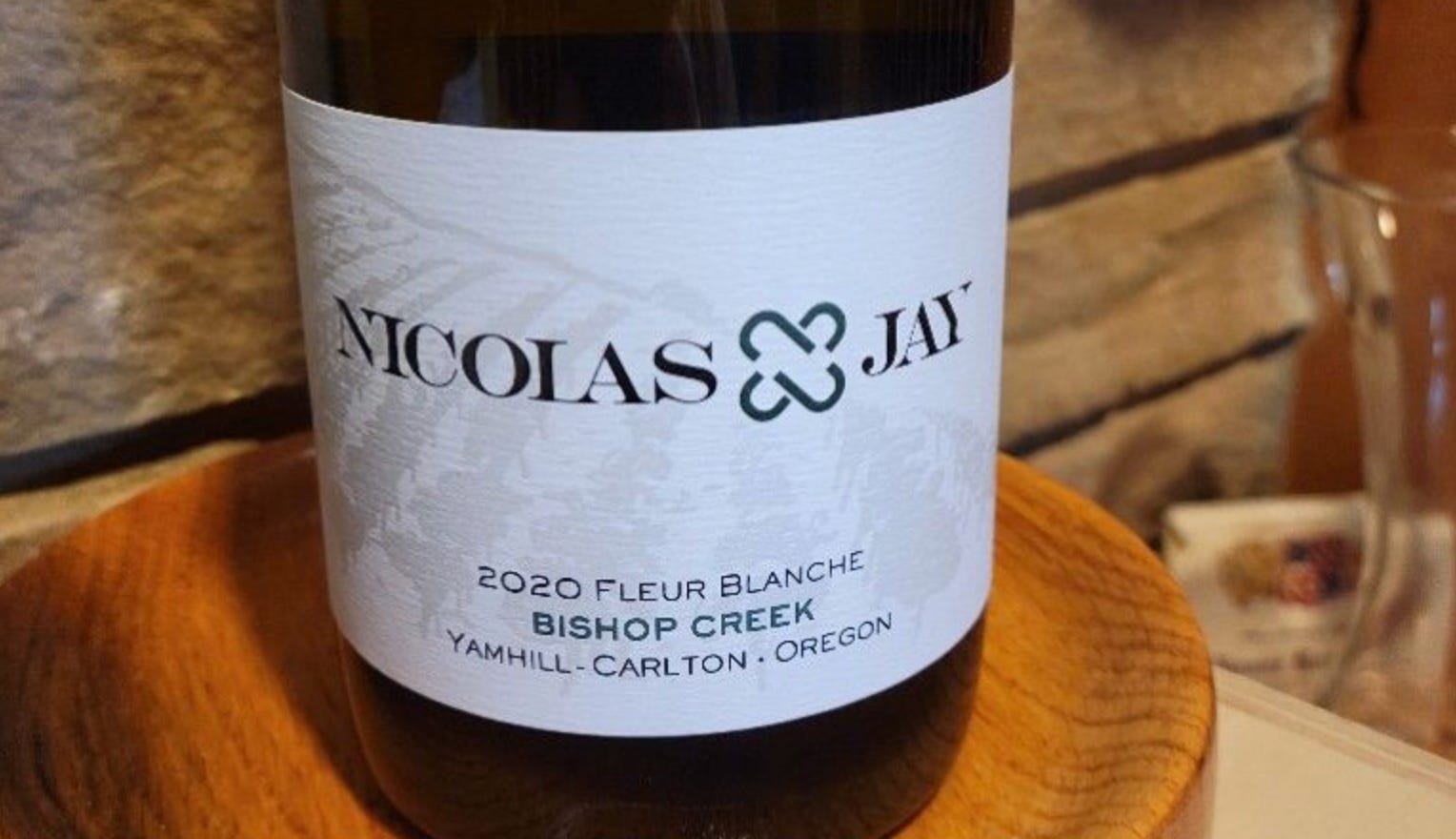
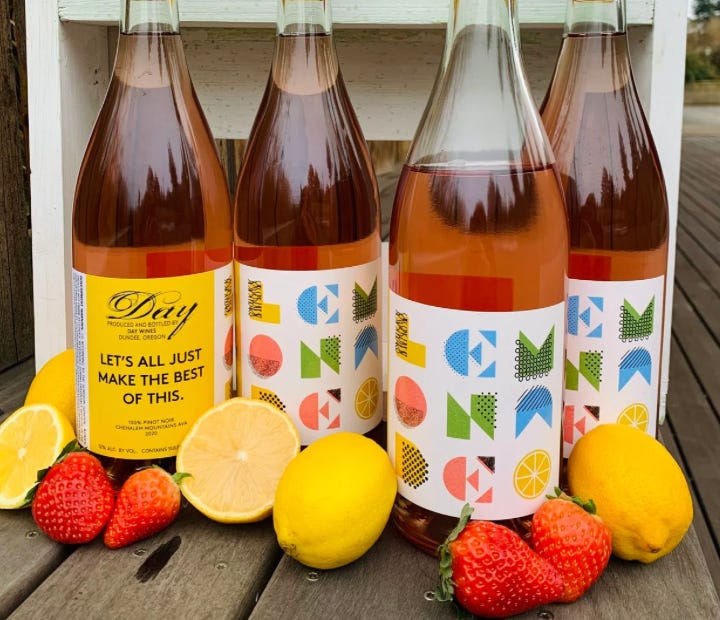
And it wasn’t just clever marketing. It was an incredibly logical response to the problem at hand. If you didn’t trust the fruit, one of the safest options was to minimize extraction from the skins by getting the juice away from them as quickly as possible. So producers across Oregon—Nicolas Jay, Stoller and Sequitur and more—pivoted toward white Pinot Noir, rosé and sparkling wines, gently pressing their Pinot rather than allowing the juice to sit and ferment on potentially smoke-affected skins.
It doesn’t necessarily guarantee that the wine will be smoke-free. But a gentle whole-cluster press with minimal skin contact dramatically reduces extraction from the skins, making it a far safer bet than traditional red-wine fermentation.
So, suddenly, an incredibly difficult vintage put a once-niche category of Oregon wine front and center.
But what if you’ve already made the wine?
There’s one other option we should talk about that winemakers have in their tool belt, though not many small producers have the resources—or frankly the financial incentive—to utilize it.
That option is reverse osmosis.
Say you’ve already made the wine with business as usual, and you end up with a red wine that smells like an ashtray. It’s not good. What do you do? You could pour it down the drain and lose your entire potential revenue. You could sell it anyway, have customers be unhappy and risk your own brand loyalty and reputation. Or you could spend even more money, roll the dice, and implement reverse osmosis.
In layman’s terms, reverse osmosis is essentially a very high-tech filtration system. The wine is pushed through extremely fine membranes that separate out certain compounds, treat the portion containing said smoke compounds, then put the wine back together again. So it’s less Brita filter and more reconstructive surgery.
And it can work. But a machine doesn’t possess a winemaker’s palate. It can’t distinguish between the offending compounds you want to remove and all of the beautiful aromatic compounds that made the wine taste like Pinot Noir in the first place. So the more aggressively you treat the wine, the greater the risk that you strip away its innate character.
For a large commercial winery dealing with an immense volume of wine, that level of expense and intervention might make economic sense. But for a small producer only making a few hundred cases from a particular vineyard, it might cost more to treat the wine than that wine is ever going to make back.
And for winemakers whose entire ethos revolves around minimal intervention, sending their wine through what essentially amounts to a major surgical procedure feels like anathema to their philosophy in the first place.
So what’s the right answer?
It’s easy six years later to look back at the wines of 2020 and judge decisions with the benefit of hindsight. Some made red Pinot Noir, and it worked. Some pulled the plug on harvest completely. A lot made Blanc de Noirs. Some poured tank after tank of finished wine down the drain.
But nobody making those decisions knew how the story was going to end.
And I think that’s what we miss when we talk about smoke taint purely as a wine fault. Yes, it’s a matter of chemistry, but it’s also a matter of farming contracts and harvest crews, bank accounts and bottom lines, reputations and livelihoods. No matter what, any move you make is a gamble.
There isn’t a clear path—just a multitude of imperfect options on a looming timeline.
The silver lining, if there is one, is that we definitely know more today than we did in 2020. The tests are getting more accurate. Researchers have a better understanding of how smoke compounds behave both in grapes and finished wine. And winemakers now have six more years of lived experience and hard-earned knowledge passed along by colleagues in California, Australia, Oregon and, with harvest 2026, a whole lot more countries to add to the list.
And, if this summer is any predictor of the future, it seems unfortunately like we are going to need it.
Wine has always been an exercise in relinquishing control. You can do everything “right”—prune perfectly, farm methodically, and pick at exactly the right level of Brix—but the trump card is always in Mother Nature’s hand… whether it’s frost, hail, a heat spike, disease or smoke from a fire you have absolutely no power to stop.
How do these people keep signing up to do it all over again the following year?
I certainly wouldn’t have the stomach to be a winemaker, and that makes me admire my friends who do all the more.
Every vintage is an act of courage and of optimism. Another year spent working towards the dream that, eventually, their grapes will become something worth putting into a bottle and sharing with someone else—even when you’ve learned the hard way just how quickly it can all go up in smoke.