When Less Became More
Women Shaping Napa Valley, Part 4: Cathy Corison

This is Part 4 of 5 in a series on Napa Valley. You can find the other chapters here.
Napa is essentially a one-road valley.
Highway 29 runs straight up the center of the valley floor, carrying a steady stream of cars from the town of Napa in the south to Calistoga in the north. It’s not the prettiest road in the valley, but it’s the busiest… lined with tasting rooms, restaurants, and wineries peacocking for the attention of passing cars.
Many of Napa’s prestigious estates sit far removed from this bustling highway, tucked down long drives behind imposing gates that keep their vines hidden behind veils of exclusivity.
But somewhere between Rutherford and St. Helena, on that less-than-glamorous thoroughfare, lies one of Napa’s most remarkable gems.
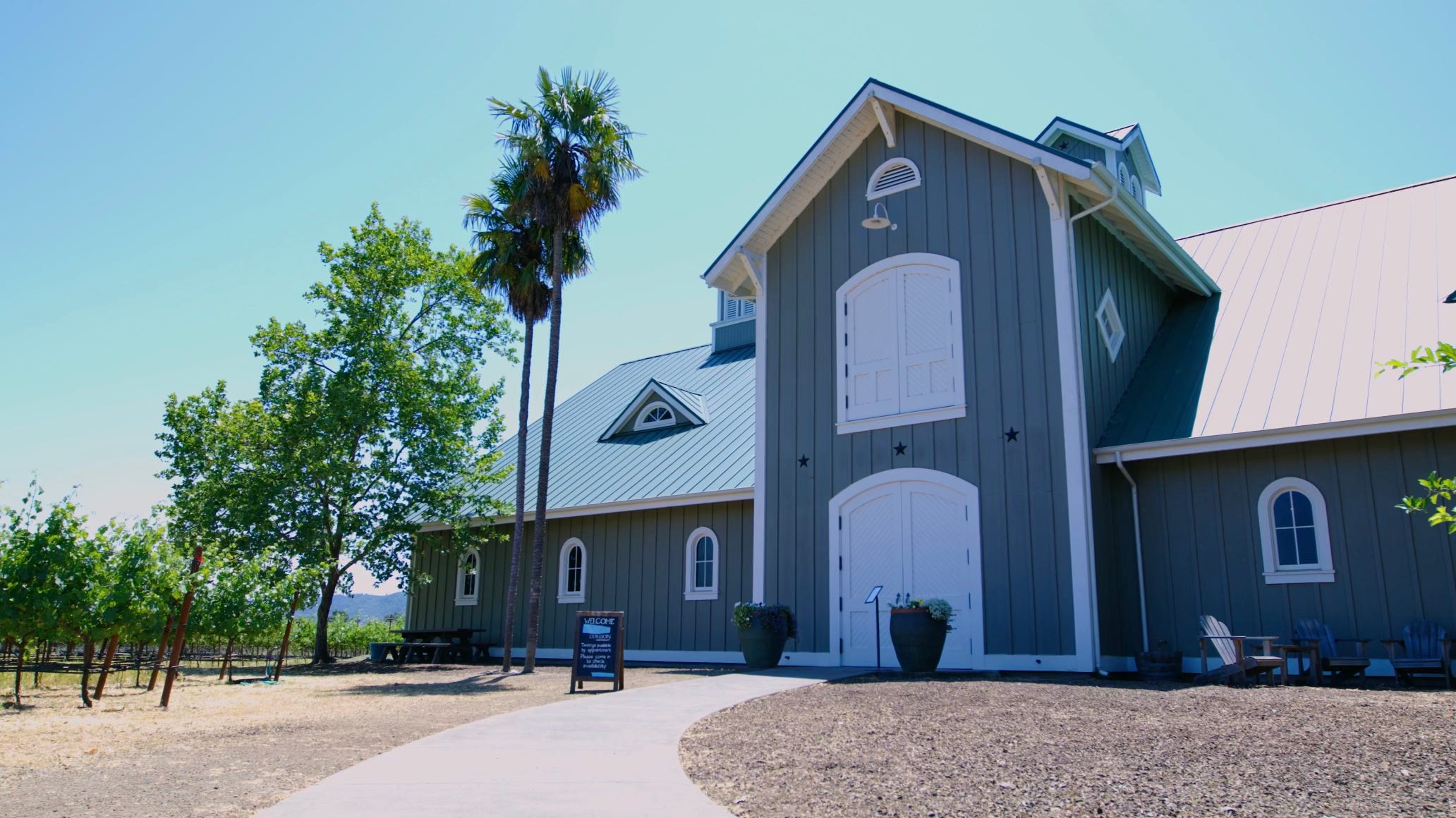
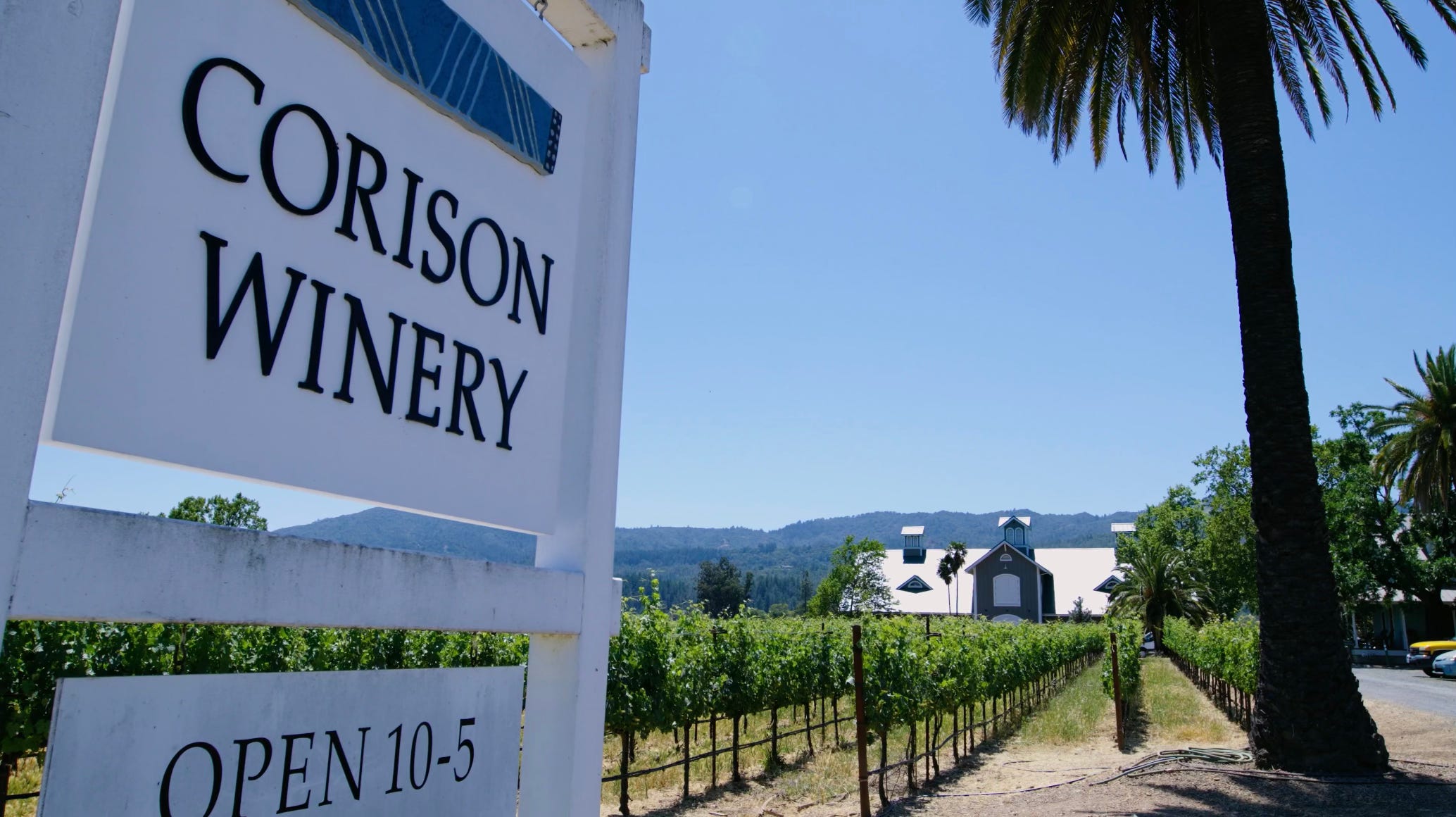
Just a stone’s throw from the steady stream of cars sits a quaint blue farmhouse and a steepled gray barn, framed by a few palm trees and a gnarled vineyard with some of the thickest vines in the valley.
There’s no wrought-iron gate or imposing carved sign to catch the eye of passing cars. Instead, a small wooden placard you might blink and miss simply reads: Corison Winery.
Would you believe that this humble gravel drive leads to some of the most extraordinary Cabernet Sauvignon in Napa Valley?
Before and After the Boom
In the 1970s, Napa Cabernet tasted very different from the bold styles many people associate with the region today.
At that time, many winemakers still looked to Bordeaux as a reference point... Fruit was often picked earlier, resulting in wines with brighter acidity, lower alcohol, and a more restrained sense of fruit. New oak was used more sparingly, and the goal was balance over brawn, freshness over force.
But as explained in last week’s essay, the trajectory of Napa shifted in the 1980s with the rise of a new scoring system that became extremely influential in the wine world. High scores could transform a winery overnight, selling out vintages and turning previously unknown bottles into collector trophies.
Not surprisingly, producers began paying close attention to the wines that were receiving the highest marks. And those wines had a distinctive style: they were riper, higher in alcohol, rich in fruit and structure, and often shaped by generous use of new oak.
There was nothing inherently wrong with this style. Many of these wines were extraordinary in their own right. But as the scoring culture took hold through the late 1980s and 1990s, its influence rippled across Napa. These wines sold quickly and commanded attention, and for many producers it simply became easier — commercially speaking — to make wines in that mold.
But not everyone chose the easy path.
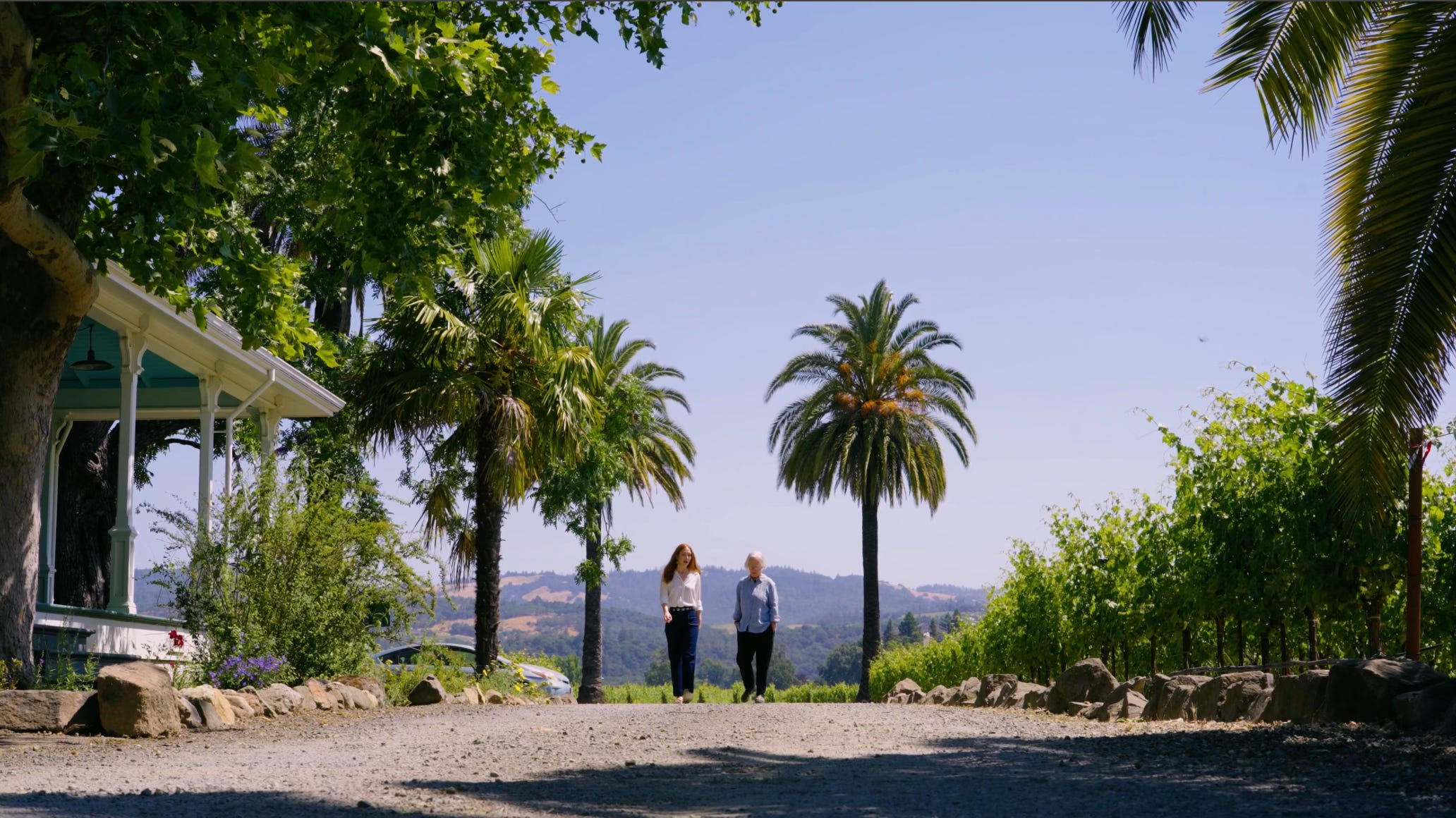
I sat down with Cathy and Grace Corison while filming the Napa episode of Her Way.
Here are some moments from our conversation.
The full video conversation lives on TODOS Media’s Substack, while the audio version is available on Apple Podcasts and Spotify.
A Young Woman Arrives
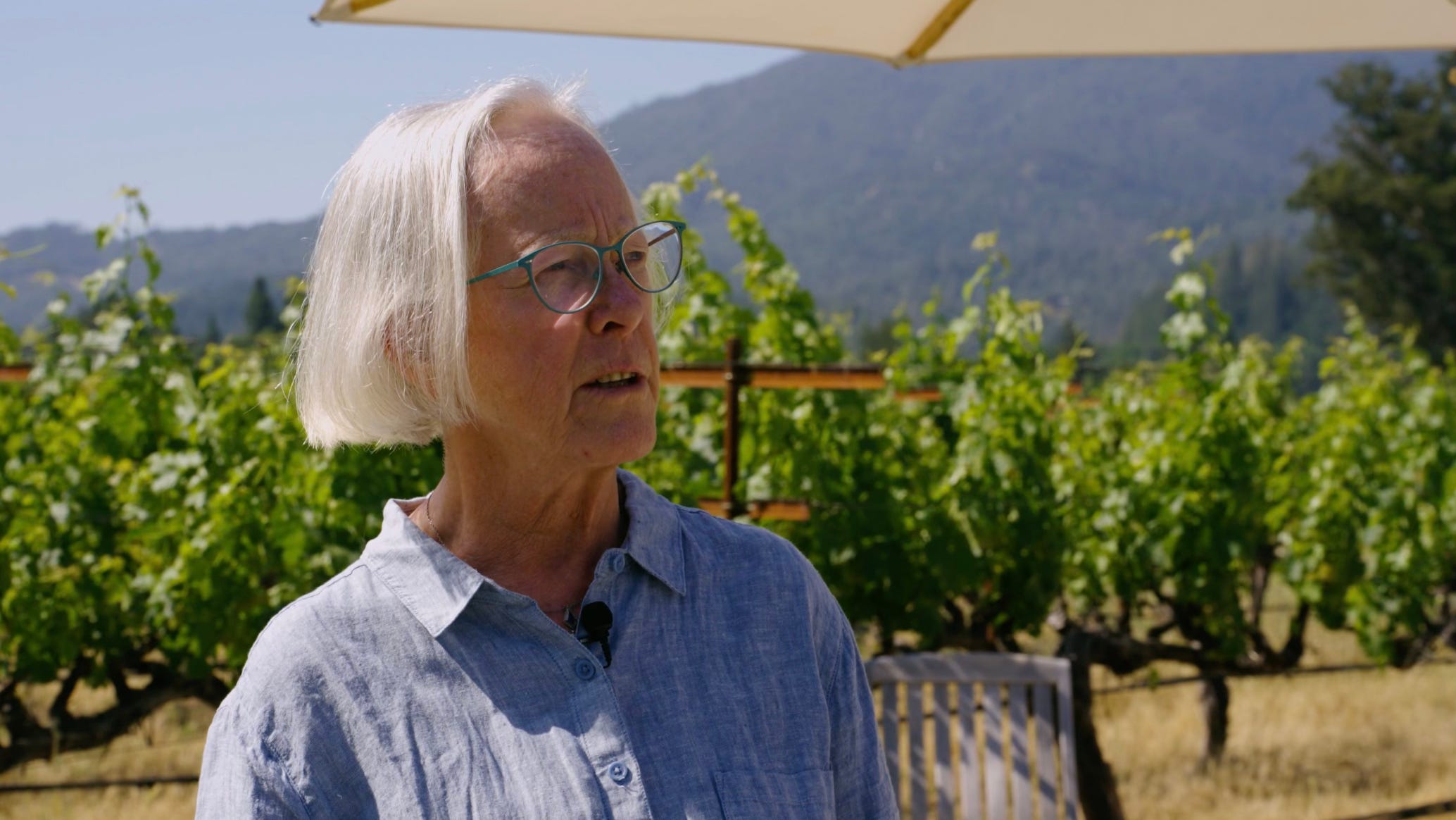
Wine was never supposed to be the plan for Cathy Corison. In fact, it wasn’t even on her radar until, on a whim, she signed up for a wine appreciation class while studying biology at Pomona College.
“I put my name at the top of the list, and I’ve never looked back.”
That class changed the course of her life forever.
It focused heavily on French wines and introduced students to the idea of terroir—that great wines reflect a sense of the place they come from. By the time she graduated two years later, she was smitten. “I knew I was going to Davis to get my master’s degree and I knew I was going to make wine.”
Which, as she put it, “made no sense,” because this was the early 1970s. “Americans didn’t care what they ate or drank. And women didn’t make wine.”
Yet Cathy enrolled at UC Davis to study oenology. She was one of only two women in the eight-student class.
“I graduated from college in 1975 and arrived in Napa Valley two days later, bent on making wine.”
Even though Napa Valley was on the rise, it looked very different than it does today. “It was poor and everybody was farmers.” There were only 30 wineries in the valley, most founded in the previous three years.
The Judgment of Paris had not yet happened, and the valley was just beginning to rebuild its modern identity in the wake of Prohibition. Cathy began working harvests and learning the craft from the ground up.
In 1978, while working harvest in the cellar, she became part of a quiet but historic shift. “That was the first year there were ever women in wine cellars hauling hoses around.”
It’s hard to imagine now, in a valley filled with brilliant female winemakers, but as Cathy reminded me, “women didn’t make wine 50 years ago.”
That didn’t stop her. She had found her happy place, and along the way she fell in love with a vineyard that would shape the rest of her career.
Forgotten Treasures
That vineyard sits in the St. Helena AVA (bordering on the Rutherford AVA) on the valley floor. It was planted in 1971, before the modern Napa boom reshaped the landscape.
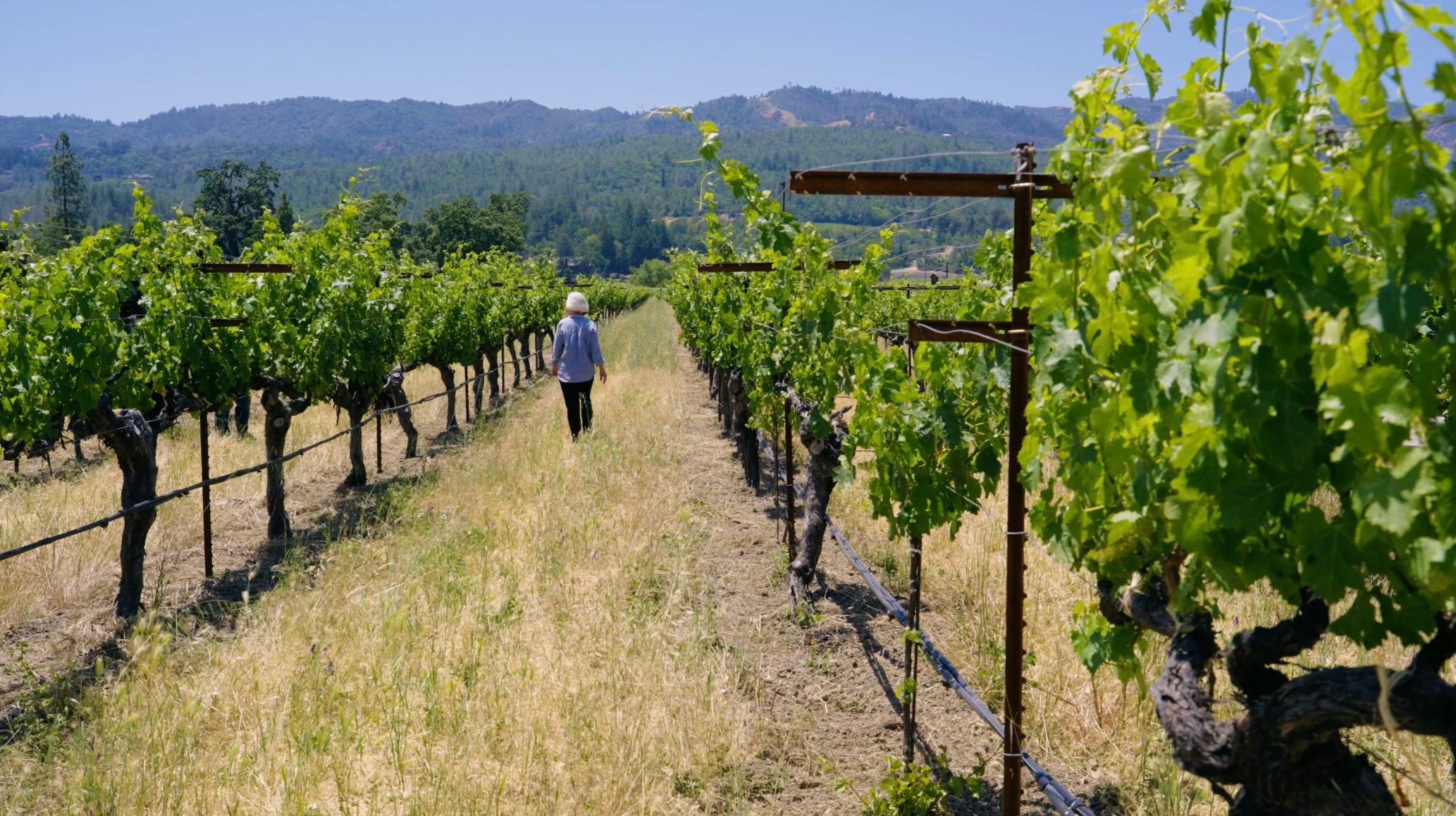
The vines are planted on St. George rootstock, a type that had largely fallen out of favor by the time Cathy encountered them. During Napa’s massive replanting wave in the 1980s, many vineyards were ripped out and replanted to newer, more fashionable rootstock.
But this one fell through the cracks, which actually turned out to be a gift. St. George rootstock is naturally drought-resistant, a trait that is now especially beneficial as Napa’s climate continues to warm.
Over time, these “gnarly old ladies,” as Cathy lovingly refers to them, pushed their roots deep into the gravelly loam, producing ever more complex fruit. Which has allowed Cathy to pursue the style she always believed in: Cabernet Sauvignon built on freshness and elegance rather than sheer power.
At Corison, balance is paramount. Cathy harvests earlier than many of her neighbors, preserving natural acidity and keeping alcohol levels moderate. Her bottlings are “always under 14%,” yet retain complexity and phenolic ripeness thanks to diligent canopy management techniques.
She aims to make wines that “have a life force” — that vibrate rather than shout.
That philosophy became more commercially challenging as Napa’s stylistic pendulum swung towards bigger, richer styles in the 1980s and 90s. Yet Cathy never framed that moment as a battle.
“Fashions come and fashions go.”
Rather than criticize the wines that dominated that era, she welcomes stylistic diversity. She wants people to continue making different styles than her because, “We all have different preferences. So diversity is good.”
Unsurprisingly, Cathy never submitted her wines for scores. “If you believe the good scores, you need to believe the bad ones too. And at least for me, it was not a good idea to have that be my whole marketing plan. I want the wines to speak for themselves.”
That quiet confidence and ability to keep making the wine she aligned with—regardless of trends and fanfare— earned her something perhaps more valuable than blockbuster scores: the deep respect of collectors, sommeliers, and wine lovers who recognized the authenticity of the wines she was making.
And even now, as the pendulum is swinging back in the other direction, more towards the ‘Corison style,’ she isn’t gloating.
“All we have to sell is our integrity,” she says simply.
Passing the Torch
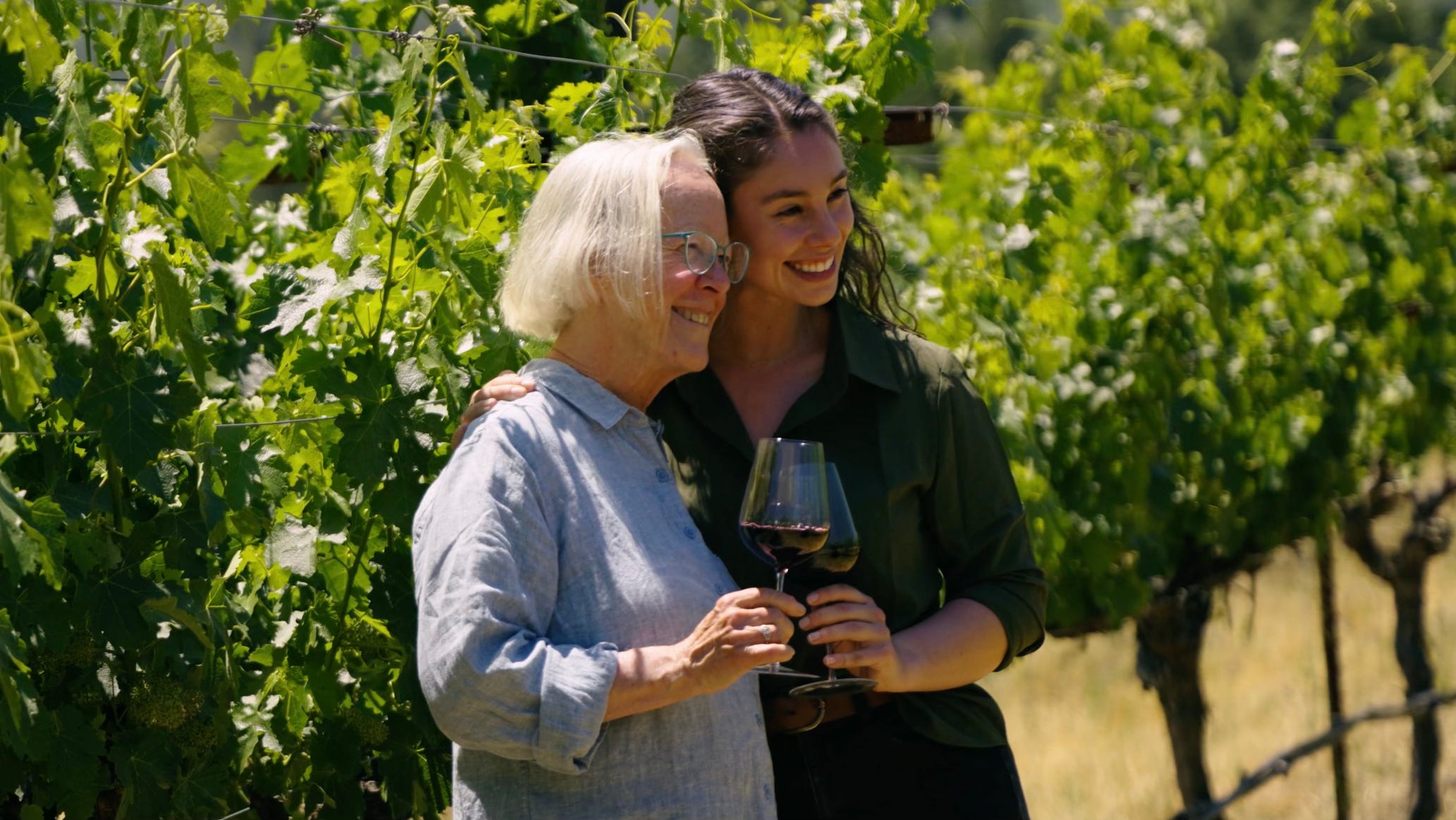
And that integrity is exactly what she is passing down to her daughters, Grace and Rose. Because while Cathy was busy blazing trails for women in Napa Valley, she was also raising children along the way.
One reason the winery remained so small was so she could keep herself “wrapped around it all and still raise two beautiful daughters.”
But despite raising them at the winery, Cathy never pressured her daughters to take over the business. In fact, she never let them see how much she wanted that.
“I mean they already did run away screaming and that was their job. But I think [if they had known] they might have just kept running.”
Grace never imagined she would return. After studying acting at Syracuse University, she moved to New York City, and while there worked at Union Square Cafe (yes, we had plenty to bond over). From that vantage point, she began to look at wine through fresh eyes.
Then the pandemic happened, giving her the chance to return to Napa and try her hand at the work her mother had spent decades perfecting.
Much to her surprise, she fell in love with it.
And much like her mother, decades earlier, she hasn’t looked back since.
Coming back also gave Grace fresh perspective on what younger drinkers are looking for today. Like many in her generation, she found herself disappointed with “how much greenwashing there is in this industry.”
She believes that, “younger drinkers care a lot more about checks and balances. They care a lot more that you’re putting your money where your mouth is.”
And luckily, her mother has been doing that at Corison since Day One.
Cathy has been farming using organic practices from the beginning, long before it was fashionable. As she puts it, “there’s no excuse not to farm organically, especially in this benign climate.”
Grace has now formalized those practices by getting Corison certified through COOF for the estate vineyards, and through Napa Green for both the winery and vineyards—a program that rigorously evaluates not only your practices in the vineyard and the winery but also how you treat your employees and your larger environmental impact. They use a fully electric tractor, use solar energy to power the winery and team members travel between vineyards by bike.
Corison produces fewer than 3,000 cases a year (tiny, by Napa standards), and that scale has remained essentially unchanged since Cathy’s first vintage in 1987.
The goal has never been growth for its own sake. As Grace puts it, the ambition is simply “to get better and better and better at doing what we do.”
In a world where bigger is so frequently tied to better, this attitude is deeply refreshing. But then again, so are the wines of Corison.
You can watch the full conversation with Cathy & Grace Corison, filmed overlooking their historic Oakville vineyard, on TODOS Media’s Substack. Or listen to the audio version on Apple Podcasts or Spotify.
However you choose to experience it, I hope you enjoy the conversation as much as I did.
And if you missed Parts 1, 2 and 3 of this series on Women Shaping Napa Valley, you can read them here.